
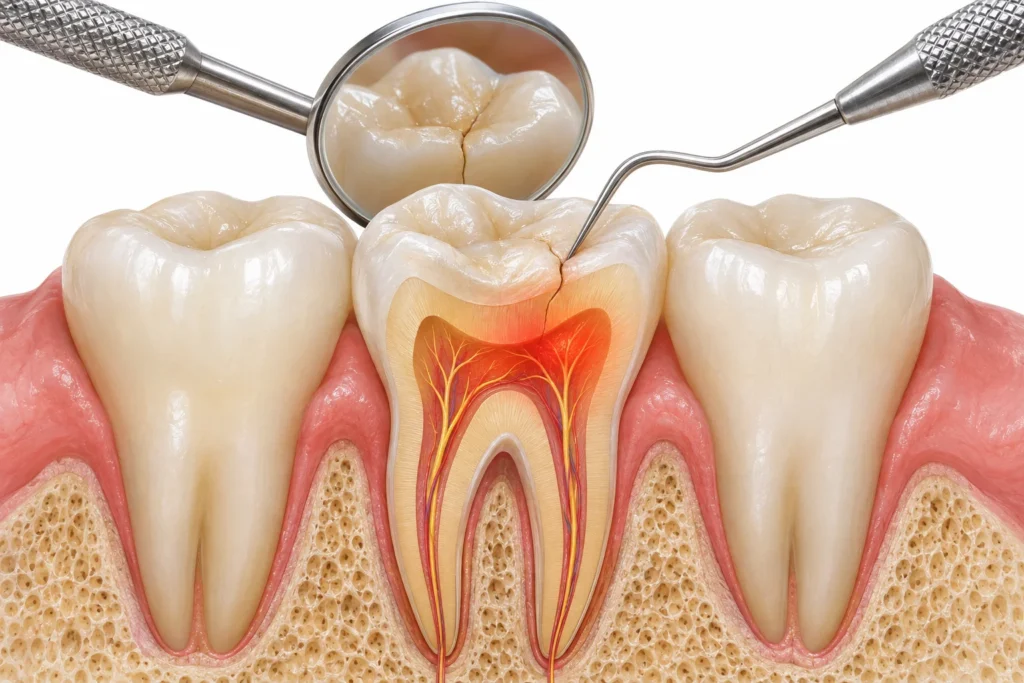
Tooth pain when biting often means that pressure is irritating a tooth or the tissues around it. Possible causes include a crack, cavity, loose filling, gum problem, infection, or a bite that puts too much force on one tooth. An examination is the best way to identify the cause, especially if the pain persists or returns.
The type of pain can offer clues, but it cannot confirm a diagnosis. A dentist may need to examine the tooth, check your bite, and take X-rays before recommending treatment.
Common Causes of Tooth Pain When Biting
A Cracked Tooth
A crack can make a tooth hurt when you bite down or when you release pressure. You may also notice sensitivity to cold or pain that comes and goes. Some cracks are too small to see at home, and they do not always appear on an X-ray.
Treatment depends on the crack’s location and depth. A filling or crown may protect some cracked teeth. If the crack has damaged the tissue inside the tooth, root canal treatment may also be considered. A crack extending below the gumline may make the tooth difficult or impossible to save.
A Cavity or Damaged Filling
Tooth decay can weaken a tooth and expose more sensitive layers. A filling that is loose, broken, or worn can also allow pressure or temperature changes to trigger discomfort. Food caught in an area of decay may make the tooth hurt when you chew.
A small cavity may be treatable with a filling, while a larger area of damage may need a crown. Fillings preserve more tooth structure, but they may not provide enough support for a heavily damaged tooth. Crowns offer broader coverage but require the tooth to be reshaped.
Inflammation or Infection Inside the Tooth
The pulp is the soft tissue inside a tooth that contains nerves and blood vessels. Deep decay, a crack, or an injury can inflame or infect it. Pain may occur with biting, temperature changes, or without an obvious trigger. A dental abscess can also cause tenderness, swelling, or a bad taste, although swelling is not always present.
Depending on the diagnosis, treatment may include root canal treatment or extraction. A root canal aims to remove infected or damaged tissue and retain the tooth, but the tooth may still need a crown and cannot always be saved. Antibiotics are not a substitute for dental treatment; a dentist may prescribe them in certain circumstances, such as when an infection is spreading.
A High Filling or Uneven Bite
If pain starts after a new filling or crown, the restoration may be making contact before the surrounding teeth. That extra pressure can make the tooth sore when you bite. Other causes are also possible, including temporary irritation from treatment.
A dentist can check your bite and adjust the restoration if needed. Do not try to file or adjust it yourself. Contact the dental office if the bite feels uneven or the pain is not improving.
Gum Disease or Food Trapped Between Teeth
Inflamed gums can feel tender when pressure is applied. Gum disease can also affect the tissues and bone supporting a tooth, sometimes causing looseness or discomfort while chewing. Food wedged between teeth may create localized soreness even when the tooth itself is not the source.
Treatment depends on the problem and may involve removing trapped debris, professional cleaning, or more extensive gum treatment. Good home care is important, but established gum disease often needs professional evaluation.
Grinding or Clenching
Grinding or clenching can place repeated force on teeth and make them feel sore, particularly in the morning. You may also notice jaw muscle fatigue or sensitivity in more than one tooth. Grinding can contribute to worn teeth, damaged restorations, and cracks.
If a dentist identifies signs of grinding, a custom night guard may help protect the teeth. It does not necessarily stop clenching, and it may not resolve pain caused by another condition. An examination is important before assuming grinding is the cause.
Sinus Pressure
The roots of some upper back teeth are close to the sinuses. Sinus inflammation can sometimes cause aching that feels like tooth pain, particularly across several upper teeth. Congestion or pressure in the face may occur at the same time.
Because a dental problem can cause similar symptoms, persistent pain or pain focused on one tooth deserves a dental examination rather than an assumption that it is sinus-related.
How a Dentist Determines the Cause
A dentist may ask when the pain began, whether it occurs when you bite or release, and whether hot or cold foods affect the tooth. They may look for cracks, decay, loose restorations, and gum changes, then check how your teeth meet.
X-rays can help identify problems such as decay between teeth, bone changes, or signs of infection around a root. However, not every crack or early problem is visible on an X-ray. Additional tests or a follow-up examination may be needed if the cause is not immediately clear.
What to Do While Waiting for an Appointment
If you have tooth pain when biting, arrange a dental evaluation. In the meantime, these measures may make you more comfortable:
- Chew on the other side of your mouth and choose softer foods.
- Gently floss around the sore tooth to remove food that may be trapped. Do not force the floss into painful gums.
- Rinse gently with warm salt water if the area feels irritated.
- Consider an over-the-counter pain reliever according to the label, if it is safe for you. Ask a pharmacist or healthcare professional if you are unsure.
- Use a cold compress on the outside of your cheek for temporary relief of swelling or soreness.
Do not place aspirin directly on the tooth or gums, because it can irritate the tissue. Home care may reduce discomfort, but it will not repair a crack or eliminate the underlying cause of an infection.
When Tooth Pain Needs Urgent Attention
Contact a dentist promptly if pain is severe, persists, worsens, or is accompanied by swelling, fever, a bad taste, or a broken tooth. A dental infection can spread, so do not wait for significant swelling before seeking help.
Go to an emergency department or call 911 if swelling makes it difficult to breathe or swallow, or if you have rapidly worsening swelling with severe symptoms.
For help with an urgent dental concern in Canby, Oregon, learn more about emergency dental care at Holly Street Dental.
Frequently Asked Questions
Why does my tooth hurt when I bite down but not otherwise?
Pressure can irritate a crack, an inflamed area around the root, or a tooth that contacts too heavily when you bite. Pain only during chewing does not rule out a serious problem. A dentist can check the tooth and surrounding tissues to narrow down the cause.
Can tooth pain when biting go away on its own?
Temporary soreness can improve, but pain from decay, a crack, or infection generally needs evaluation. Even if discomfort fades, the underlying issue may remain. Make an appointment if pain persists, returns, or is accompanied by other symptoms.
Does pain when I release my bite mean my tooth is cracked?
Pain on release can be a clue to a crack, but it is not proof. Other dental problems can produce similar symptoms, and some cracks are difficult to detect. A dentist may use a combination of tests and examination findings to assess the tooth.
Will I need a root canal if biting hurts?
Not necessarily. Treatment depends on the cause and whether the pulp inside the tooth is damaged or infected. Some teeth need a filling, bite adjustment, gum care, or another treatment; others may require root canal treatment or extraction.
Schedule a Dental Consultation
If biting or chewing is uncomfortable, a dental examination can help identify the cause and clarify your options. Contact Holly Street Dental to schedule a consultation and discuss your symptoms with the dental team.