
No, not everyone needs a bone graft after an extraction. A graft may be recommended to help preserve the shape and volume of the jawbone, especially if you are considering a dental implant. In other situations, the area may heal without one. An examination and dental imaging can help your dentist explain whether a graft would be useful for your goals.
Why Might You Need a Bone Graft After an Extraction?
When a tooth is removed, it leaves an opening in the jawbone called a socket. The socket normally fills with new bone as it heals. However, the surrounding ridge also tends to shrink over time because it no longer receives the same stimulation from the tooth.
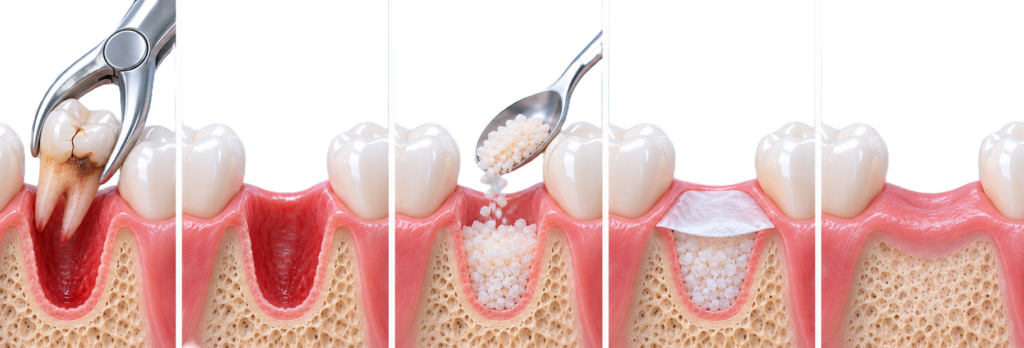
A bone graft places material into the socket to support bone healing and help limit changes to the ridge. This approach is often called socket preservation or ridge preservation.
Preserving bone may make it easier to plan a replacement tooth later, but a graft does not guarantee that the ridge will stay exactly the same shape or that an implant can be placed without additional treatment.
When Is a Graft More Likely to Be Recommended?
Your dentist’s recommendation depends on the condition of the tooth and surrounding bone, your health, and whether you plan to replace the tooth. A graft may be worth discussing in these situations:
- You are considering a dental implant. Implants need enough healthy bone for support. Preserving the socket may help maintain bone for future placement.
- Bone has already been lost. Gum disease, infection, injury, or a damaged tooth can affect the bone around a tooth before it is removed.
- The tooth is in a visible area. Changes in the ridge can affect the appearance of the gumline and a future replacement tooth.
- You are unsure when you will replace the tooth. A graft may help preserve options while you consider your next step.
- You may need a removable denture. Maintaining the shape of the ridge can be helpful for denture planning, although a graft is not necessary for every denture patient.
Even when an implant is planned, not every extraction site requires a graft. Some sites have sufficient bone to heal without one, and in selected cases an implant may be placed at the time of extraction. Your dentist can explain which options are appropriate after evaluating the area.
When Might You Not Need a Bone Graft?
A graft may not add enough benefit to justify the procedure in every situation. For example, you may decide not to replace a tooth, or your treatment plan may not depend on preserving bone at that particular site.
Other health or dental concerns may also affect the timing or suitability of grafting. Your dentist will consider factors such as active infection, gum health, medications, smoking, and your ability to follow the healing instructions.
Choosing not to graft does not mean the socket will fail to heal. It does mean that the ridge may change shape, which could affect future tooth-replacement options. If your plans change later, additional bone treatment may be possible, but it can involve a separate procedure and more healing time.
What Happens During a Bone Graft After Extraction?
When socket preservation is planned, it is often performed during the same appointment as the extraction. The dentist removes the tooth, cleans the area, and places graft material into the socket. A protective covering, called a membrane, and stitches may be used to help protect the site.
The graft material provides a framework that supports bone healing. Materials can come from several sources:
- Your own bone: This may require a separate donor site.
- Processed human donor bone: This comes from screened donors and is prepared for medical use.
- Processed animal-derived bone: This is prepared for use as graft material.
- Synthetic material: This is manufactured rather than taken from human or animal tissue.
Different materials have different properties and may be recommended for different situations. If you have concerns about the source of a graft, tell your dental team so you can discuss the available choices.
What Are the Benefits and Drawbacks?
Potential benefits
The main benefit of socket preservation is helping limit the loss of bone width and height after an extraction. This can support future implant planning and help maintain the shape of the area. Having the graft placed at the extraction visit may also avoid returning for a separate preservation procedure.
Limitations and risks
A graft adds a procedure, cost, and healing considerations to an extraction. Swelling, tenderness, and minor bleeding can occur. Complications can include infection, exposure or loss of graft material, and inadequate bone formation. Some people may still need additional grafting before an implant can be placed.
The outcome depends on several factors, including the condition of the site and how it heals. Your dentist can discuss the expected benefits and risks for your situation before treatment.
How Long Does Healing Take?
The gums may begin to feel better within days to weeks, but the bone underneath takes longer to mature. If an implant is planned, the grafted site often needs several months of healing before placement. The timing varies with the amount of bone loss, the graft material, your health, and the treatment plan.
Your dentist may examine the area and use imaging to assess healing before recommending the next step. A comfortable-feeling gum does not necessarily mean the bone is ready for an implant.
How Do You Care for the Area?
Follow the specific instructions provided by the clinician who performs your extraction and graft. Instructions can vary depending on the procedure and whether a membrane or stitches were used. Your dental team may advise you to:
- Protect the site and avoid disturbing it with your fingers or tongue.
- Eat soft foods and chew away from the treated area as directed.
- Avoid smoking or vaping, which can interfere with healing.
- Take any recommended or prescribed medication as instructed.
- Keep follow-up appointments so healing can be checked.
Contact your dental office if pain or swelling worsens, bleeding does not improve with the instructions you were given, or you notice pus or a fever. Seek urgent medical care for trouble breathing or swallowing, or rapidly spreading swelling.
What Are Your Tooth-Replacement Options?
Depending on the location and your oral health, options may include a dental implant, a bridge, or a removable partial denture. Each has trade-offs.
An implant replaces a tooth without relying on neighboring teeth for support, but it requires surgery and adequate bone. A traditional bridge is fixed in place but typically requires reshaping the teeth on either side. A removable partial denture can replace one or more teeth without implant surgery, although some people need time to adjust to wearing it.
Leaving the space open is another choice. Depending on the tooth and your bite, that may affect chewing or allow nearby teeth to shift. An examination can help you understand the consequences of each option before deciding.
Frequently Asked Questions
Can I get a bone graft later instead of at the extraction?
Sometimes. If the ridge has narrowed or lost height, grafting may be possible later, particularly as part of implant preparation. However, rebuilding an area after it has changed may require a different or more involved procedure than preserving the socket at extraction.
Does a bone graft hurt?
Local anesthetic is generally used to numb the area during the procedure. Soreness and swelling are possible afterward. Your dental team can explain what discomfort to expect and how to manage it safely.
Will insurance cover a bone graft?
Coverage varies by plan and by the reason for treatment. Ask your dental office for an estimate and check with your insurer about benefits, exclusions, and any requirements before proceeding.
Can I get an implant at the same time as my extraction?
Some patients are candidates for immediate implant placement, while others benefit from healing first. The decision depends on the available bone, the condition of the site, and other clinical factors. An examination and imaging are needed to assess the options.
Discuss Your Options Before an Extraction
If you are facing a tooth extraction, asking about bone preservation before the appointment can help you plan for what comes next. Your dentist can review the condition of the area, discuss your replacement goals, and explain whether a graft may be beneficial.
To discuss your questions and treatment options, schedule a consultation with Holly Street Dental in Canby, Oregon.